Did you know we are a full-service law firm?
Our role does not end when your estate plan is signed. Our goal is to support you during your lifetime and guide your family after you are gone.
A well-drafted estate plan ensures your wishes are clear. But there is another step that can make an even greater impact for your loved ones:
Creating a Legacy Drawer.
What Is a Legacy Drawer?
A legacy drawer is a single, organized place where your family can find everything they need when something happens to you.
At Morello Law Group, we begin this process by providing you with a binder containing your estate planning documents. But that is just the foundation. The most meaningful protection comes from what you add to it.
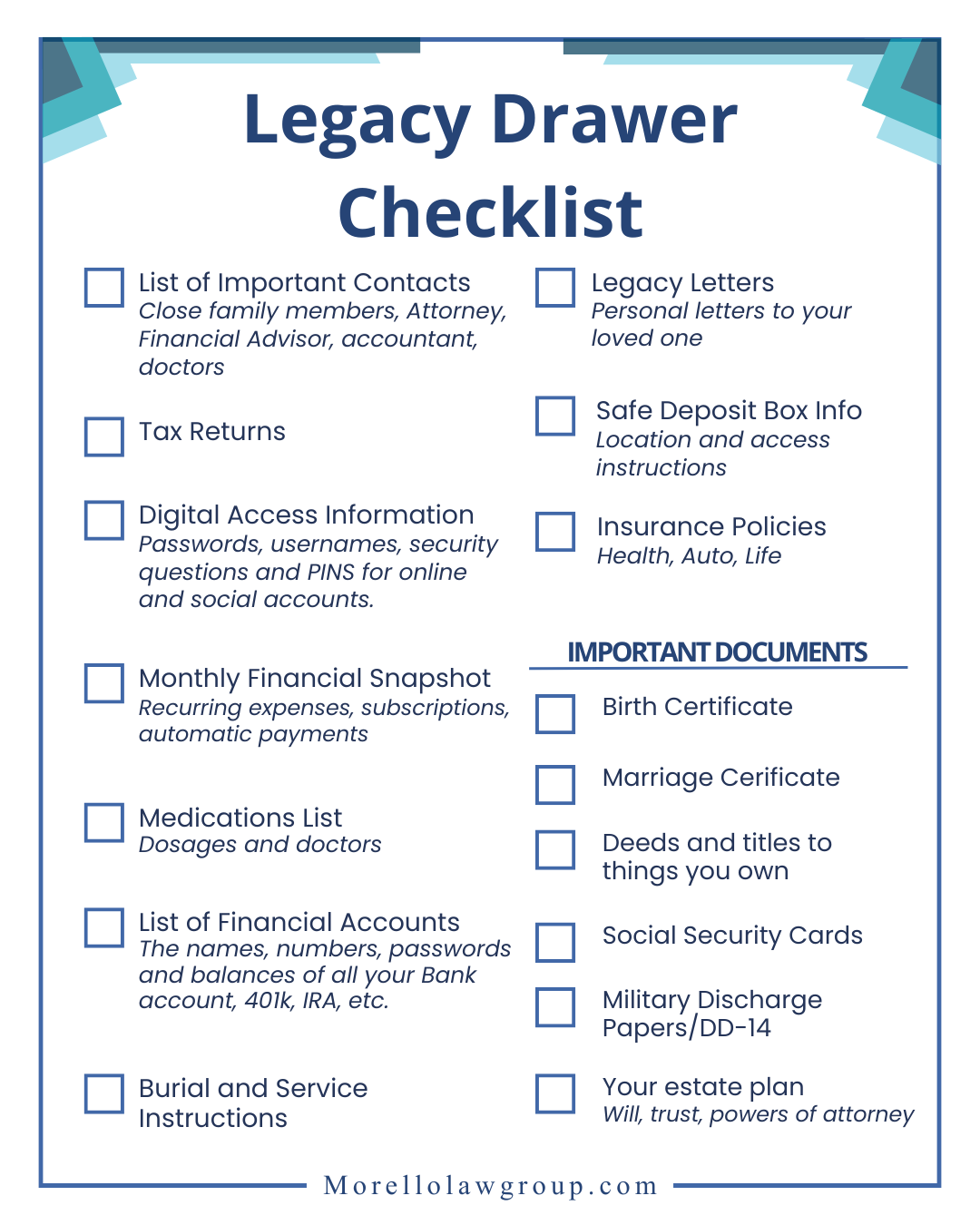
12 Items That Should Be Included (And Why)
1. Important Documents
These are the documents your family will be asked for almost immediately.
Think: hospitals, funeral homes, financial institutions.
Include items like birth certificates, marriage certificates, deeds, Social Security cards, and military discharge papers.
Without these, even simple next steps can be delayed or complicated.
2. Estate Planning Documents
This is the foundation of your plan—your will, trust, powers of attorney, and funeral designation.
These documents give your family legal authority to act and ensure your wishes are followed. Having them easy to locate prevents confusion and costly delays.
3. Important Contacts List
In a time of stress, your family should not have to figure out who to call.
List key individuals such as your attorney, financial advisor, accountant, doctors, and close family members.
One clear list can save hours of uncertainty and ensure the right people are contacted at the right time.
4. Insurance Information
Include all policies (health, home, auto, and life), along with policy numbers, beneficiaries, and agent contact information.
Insurance benefits are often time-sensitive. Having this information readily available ensures claims are not missed or delayed.
5. Financial Accounts
Document your bank accounts, retirement accounts, and other financial assets, along with account details and beneficiary designations.
Your family will need to locate and manage these accounts quickly. Without guidance, assets can be overlooked or difficult to access.
6. Monthly Financial Snapshot
Provide a simple overview of your recurring expenses, subscriptions, and automatic payments.
This helps your family keep things running smoothly and prevent missed payments, service disruptions, or unnecessary stress.
7. Tax Returns
Include both personal and business tax returns.
This is important because tax obligations do not end at death. Your family may need these records to file final returns or respond to inquiries. As crazy as it sounds, the IRS can still audit you after you die.
8. Burial and Service Instructions
Outline your preferences for services, burial, or cremation.
This removes guesswork during an emotional time and ensures your wishes are honored. If your estate plan includes a Funeral Representative Designation, then this should already be addressed.
9. Digital Access Information
Include usernames, passwords, PINs, and security questions for important accounts.
Important note: Do not immediately cancel phone service because many accounts rely on two-factor authentication.
This is important because much of your life is digital. Without access, your family may struggle to manage accounts or retrieve important information.
10. Safe Deposit Box Information
If you have one, include its location and clear instructions for access.
Even if your documents are secure, they must also be accessible. So make sure your loved ones know how to access.
11. Legacy Letters
These are personal letters to your loved ones; what you want them to know, remember, and carry forward.
Although writing these letters feels daunting, we have found that these letters often become one of the most meaningful items you leave behind.
12. Medication List
Include a current list of all medications you take, including dosages, prescribing doctors, and the purpose of each medication if known.
In a medical emergency or hospitalization, this information is critical. It helps doctors make informed decisions quickly and safely, and it ensures your family can accurately communicate your medical history when you may not be able to.
Where Should You Keep It?
Store your legacy drawer in a secure but accessible location, such as a fireproof safe or a safe deposit box (with clear access instructions).
The Step Most People Miss- Tell someone where it is.
A perfectly organized plan does not help if no one knows it exists.
We also recommend reviewing and updating your legacy drawer at least once a year.
Why This Matters
In a time of grief, your family should not also be forced to become detectives searching for documents, accounts, and contacts.
This simple act of organization can:
- Reduce stress and confusion
- Prevent costly mistakes
- Allow your loved ones to focus on what truly matters which is healing and supporting one another
How We Help Both Now and Later
At Morello Law Group, we do more than draft documents.
We help ensure your plan works when it is needed most.
From creating a clear estate plan to guiding your family through administration after your passing, our team is here to provide continuity, clarity, and trusted support every step of the way.
Want help assembling this drawer? Call us for a complimentary meeting.
Contact Us